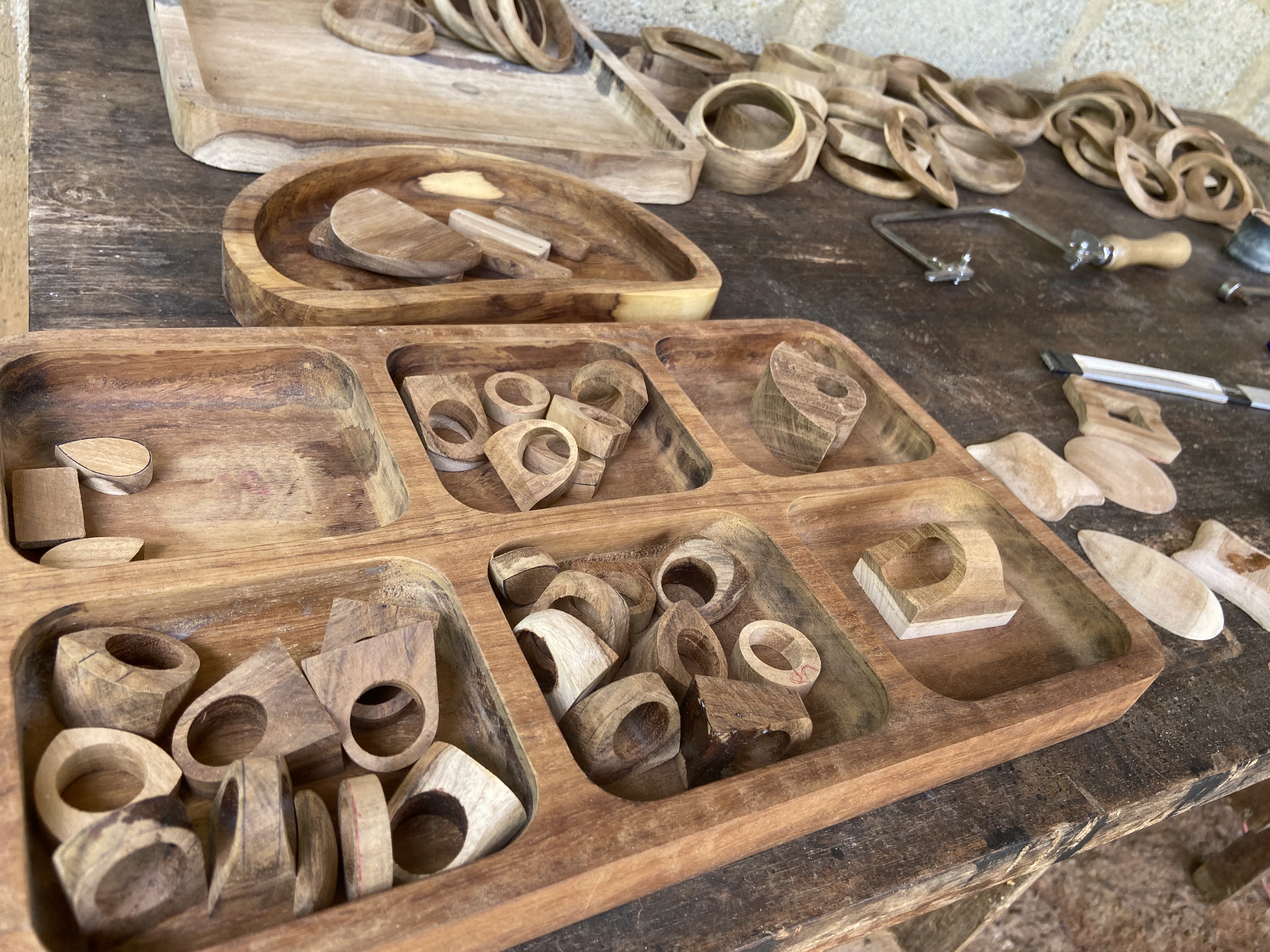
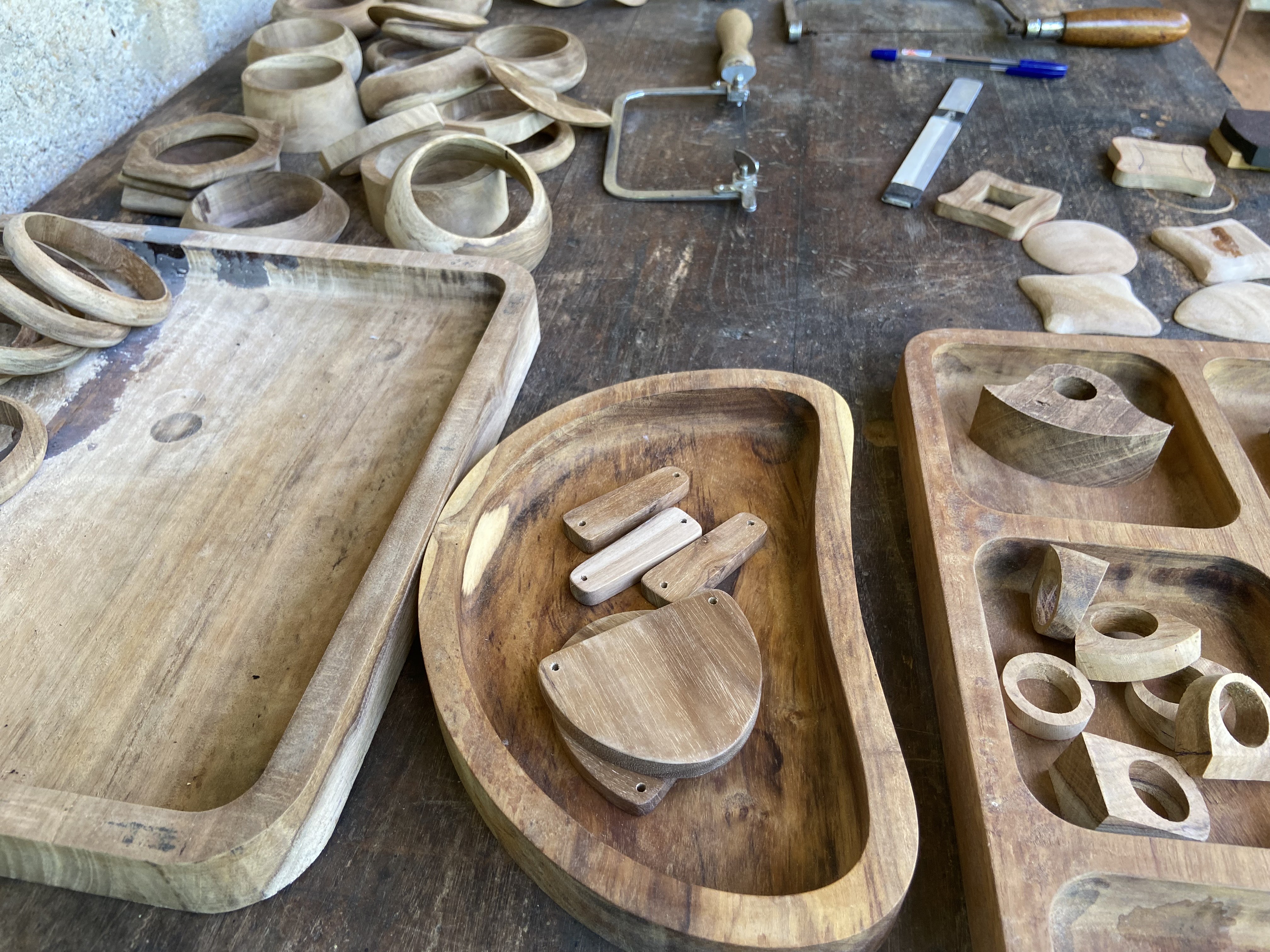
Every Waaeco piece starts here — with raw Sri Lankan timber, a careful eye for grain, and hands that know the wood. No conveyor belts, no shortcuts. Just slow, deliberate work in a small workshop on the southern coast.
We work primarily with Sri Lankan teak and mahogany — both grown in the island's Southern and Central provinces, harvested through government-regulated forestry. Each timber arrives at the workshop as rough planks, end-grain blocks, and off-cuts from larger projects. Wasantha selects by hand, paying attention to density, colour, and the figure running through each piece.
This is the most important decision in the life of a piece. A crack hidden by the rough surface will only show itself later; a weak grain will split under the force of a tool. So the wood is studied before it is ever cut. The best blanks are set aside for bangles — single-section turns with no room for error — while smaller, beautifully figured pieces become pendants, rings, and necklace elements.
Teak is hard, stable, and warm in tone. It takes detail without crumbling, and over years of wear it develops a richer, deeper colour where it touches the skin. Mahogany carries a finer, more even grain and a lighter complexion. Together they give the collection its range: honeyed caramels, soft greys, reddish browns, and near-chocolate depths.
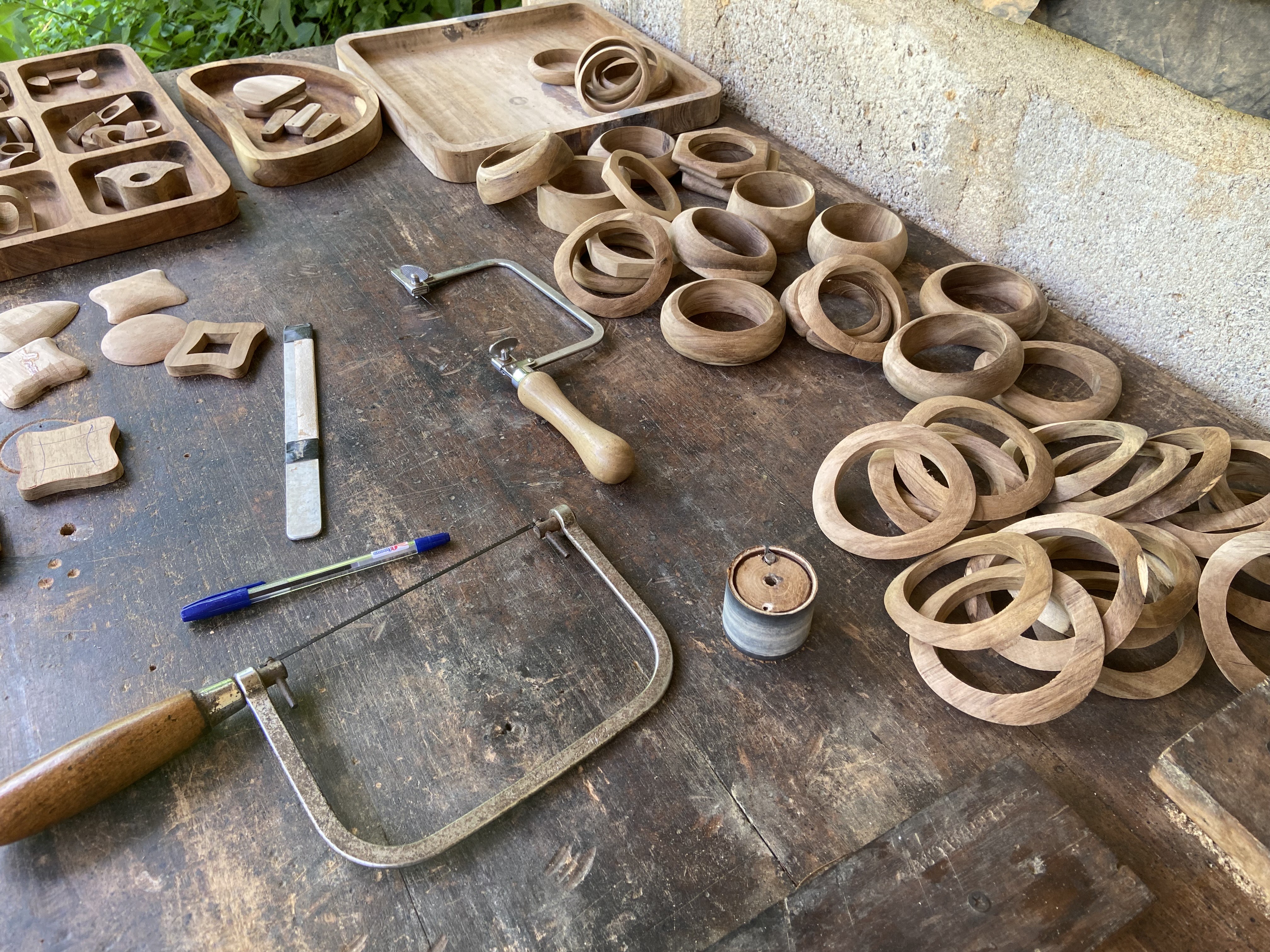
Each piece begins as an honest block. Lines are drawn by hand, centred by compass, and cut with patience — because a single millimetre of drift becomes a flaw you feel on the skin.
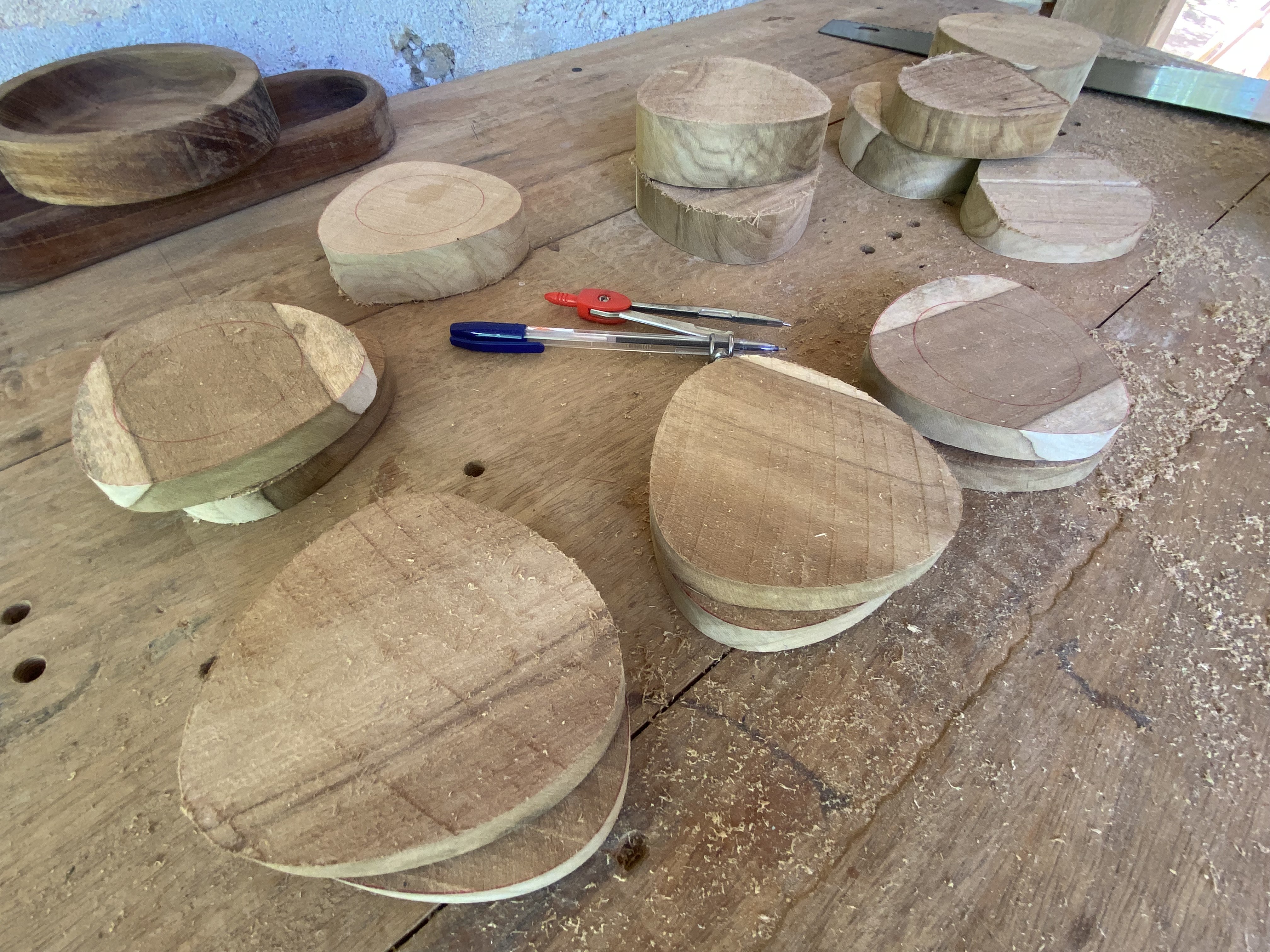
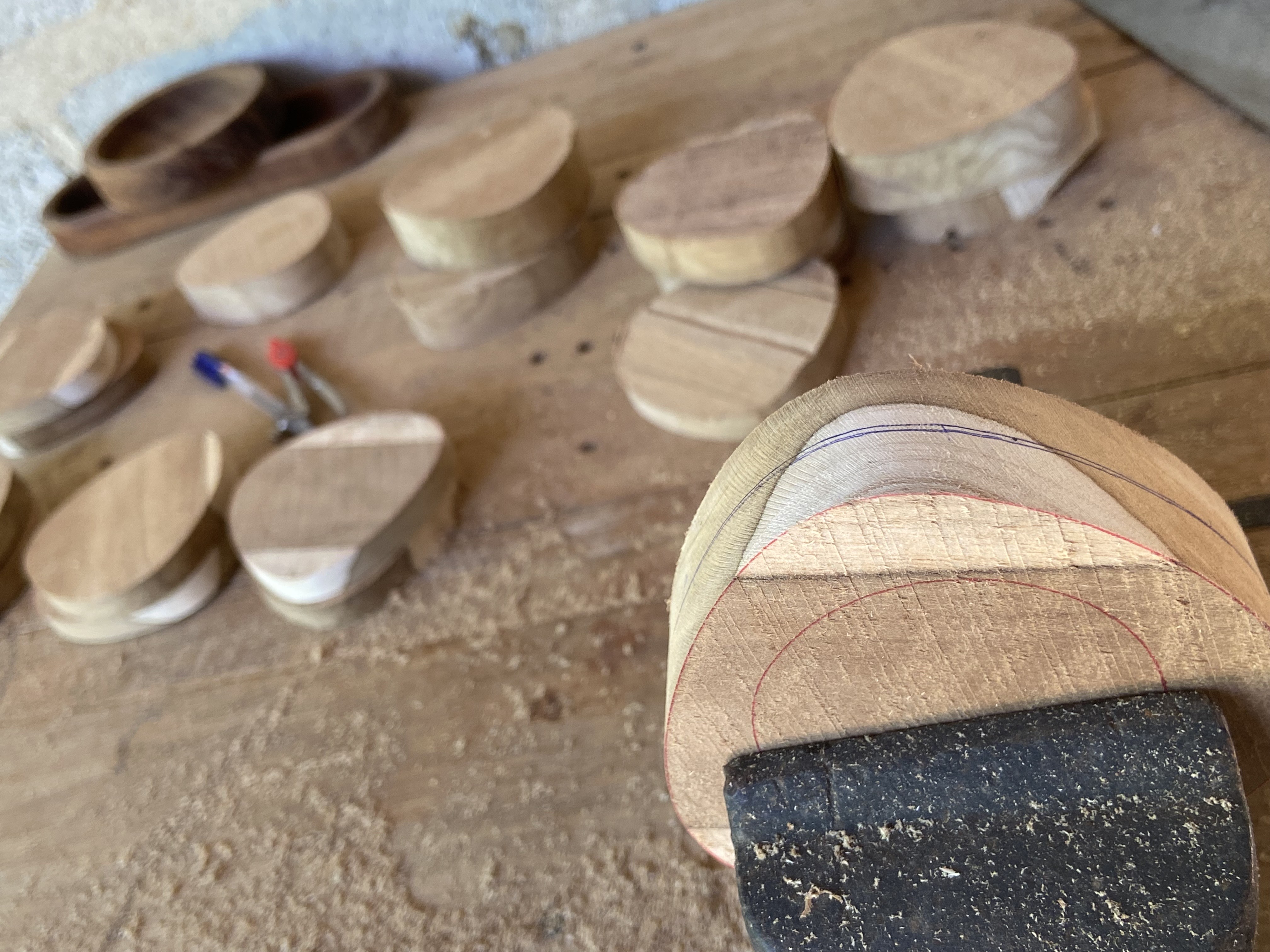
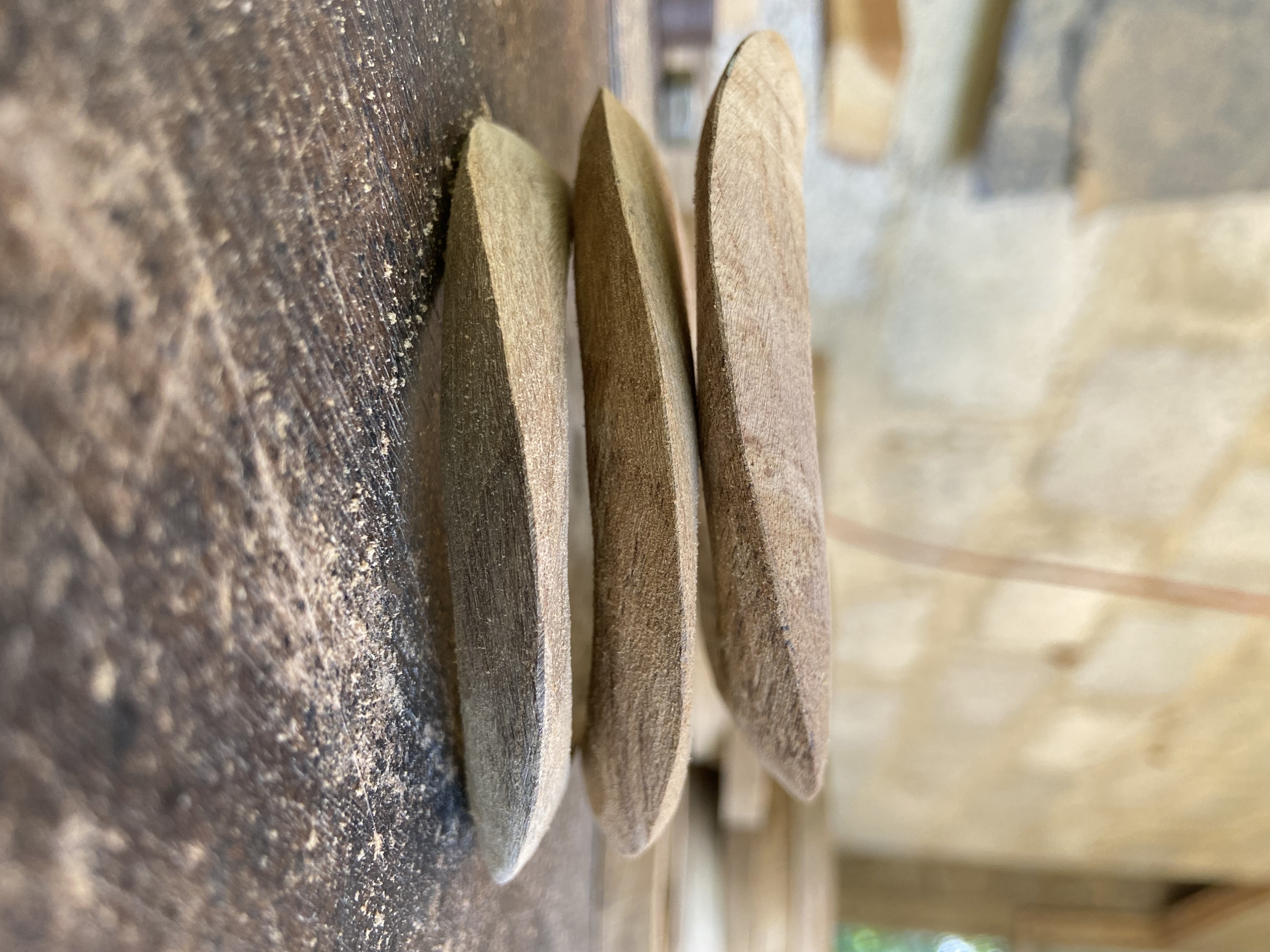
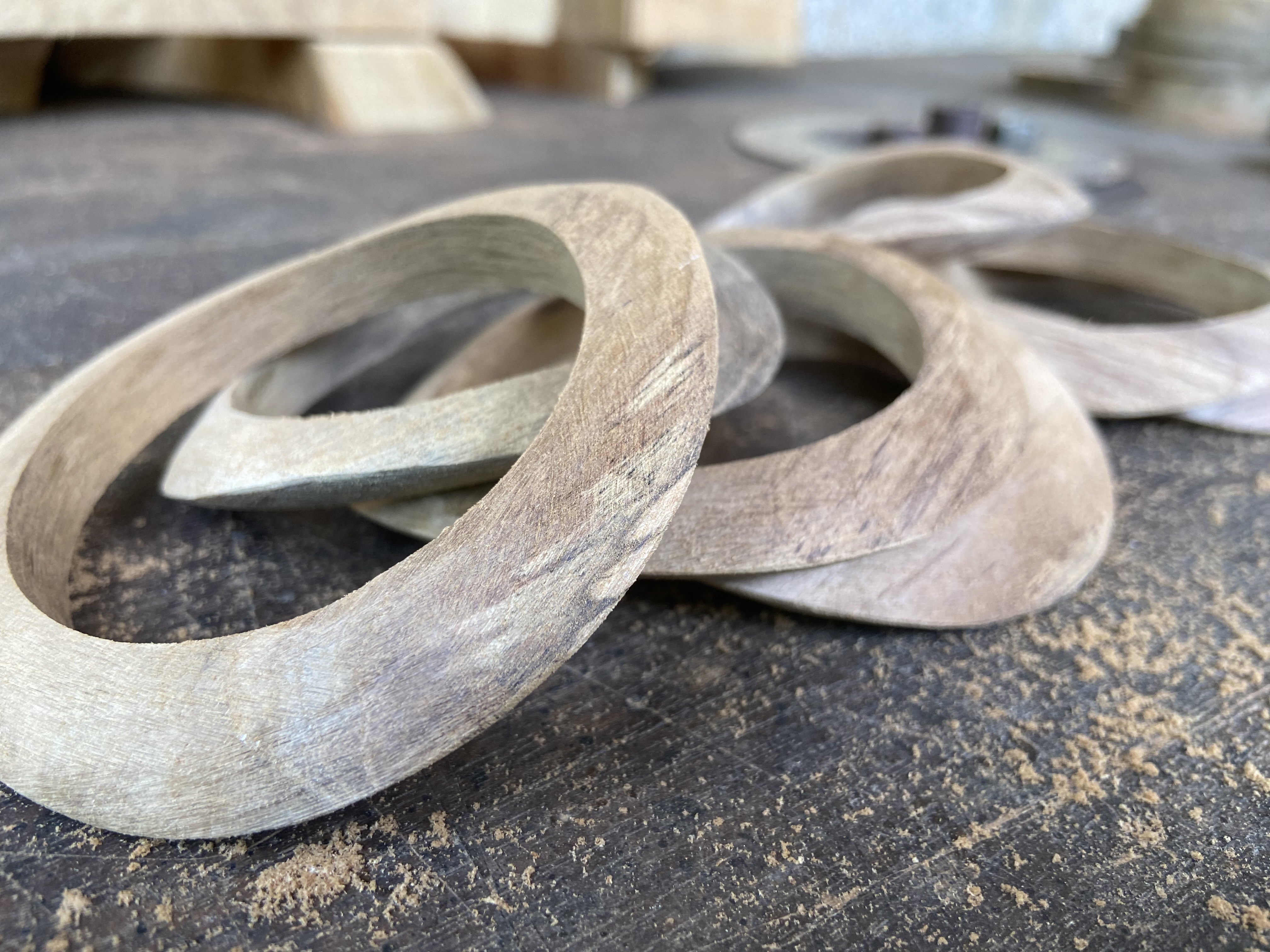
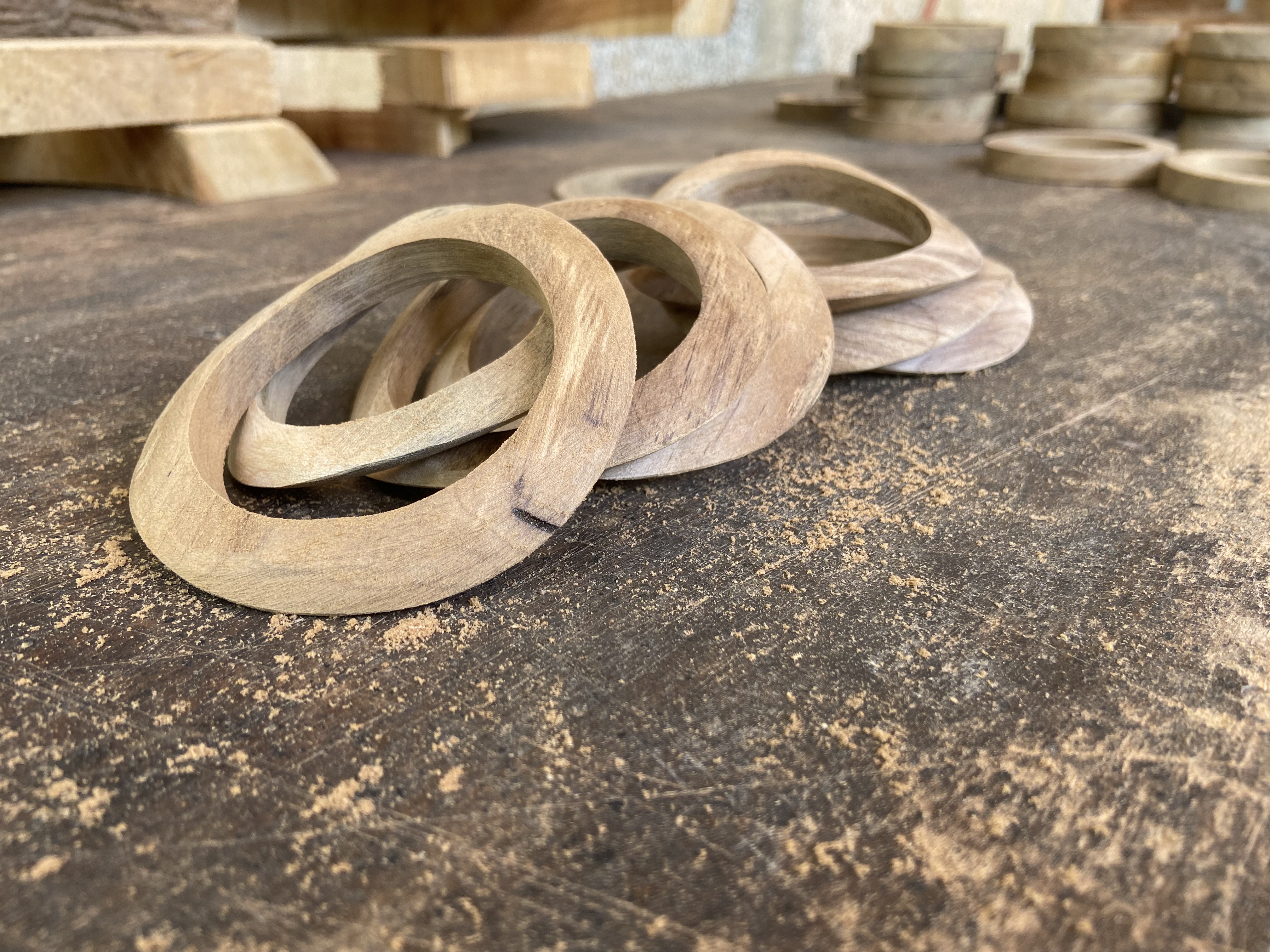
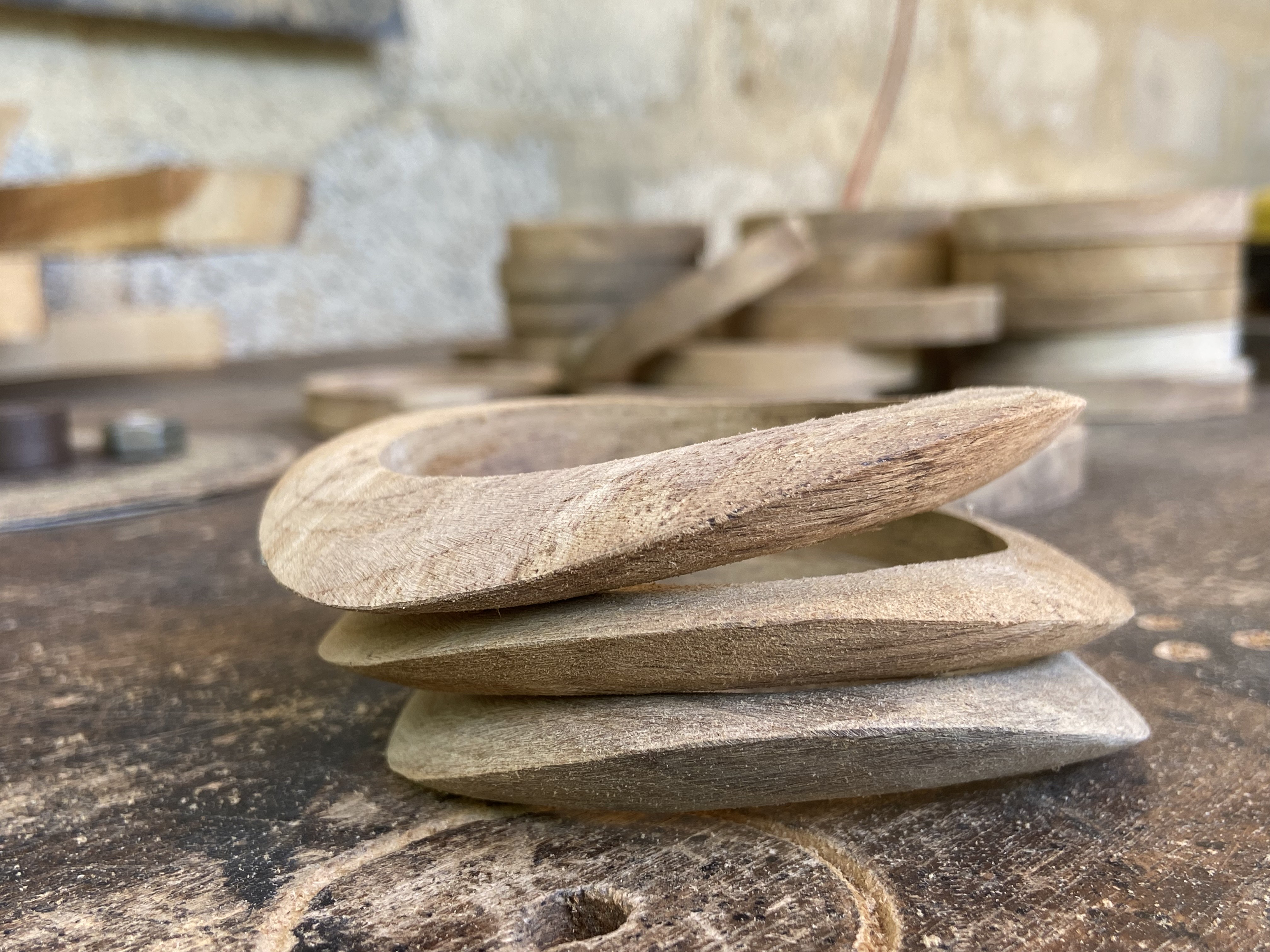
Once a blank is chosen and laid out, the shaping begins. Holes are drilled first, because the centre of a bangle or pendant must be true. Then the edges are carved away in stages — rough cuts with larger tools, followed by knives, files, and small chisels to bring the profile to life.
The work is slow. A single-section bangle must be hollowed and rounded while keeping its walls even. One wrong move and the blank is lost. That is why artisan work is calibrated by feel: the resistance of the grain, the sound of the tool, the way the sawdust releases from the cut.
After carving, the piece moves through progressively finer grits of sandpaper until the wood is smooth enough to sit comfortably against the skin. Edges are eased, curves are balanced, and every surface is inspected by eye and by touch. Only then does the finishing begin: a food-safe, skin-safe natural oil, applied by hand and buffed until the grain glows.
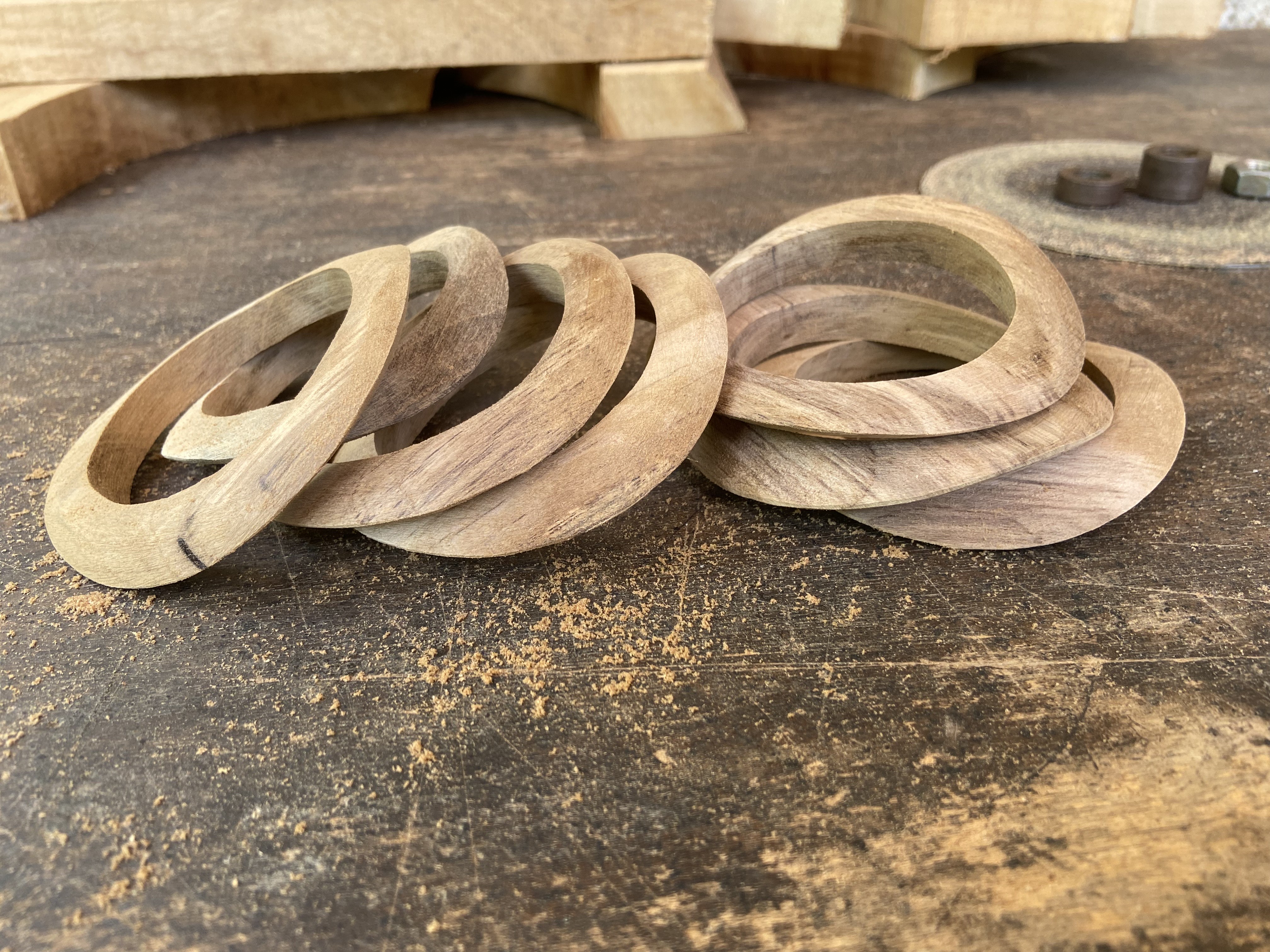
"The piece is finished when the wood feels warmer than the hand that made it."
— From the workshop, HambantotaEach piece carries the grain of the tree, the patience of the carver, and the warmth of the oil finish.
See the jewellery